


This interview first appeared in Ctrl-D in the Romanian language. Click here for original article.
_____
Christian Rangen will meet with the Romanian public at the IMWorld 2017 conference on October 4-5, 2017. Engage // Innovate will go on Main Stage, where he will hold a session on Is Your Strategy Ready for the Future?

A lot of companies talk about innovation, although they don’t always know what they mean by it. So, how would you explain innovation… for an employer and employee?
Thank you for a great question.
In its most simple terms, innovation is something new that creates value for the company and its stakeholders. Of course, very often it’s much more than that.
We like to talk about innovation vs transformation, where innovation is a number of important new things for the company – for example a new product, a new service, or entirely new business models, while transformation is really a large scale, significant change to create entirely new businesses or business areas that over time can become bigger than the old company.
We always recommend companies to learn our tool The Innovation Pyramid that uses 9 different levels to explain what is innovation. This is a really powerful tool to create shared understanding and shared language in the organization. You can download it at www.strategytools.io.
The right tools, the right structure or the right mindset – which one is the most important for a company to successfully seize new growth opportunities. Why?
You need all three. We work a lot with companies to build innovation capabilities, and again and again and again, we see that we need this combination of factors.
You need a mandate and structure for anything to happen, you need the right tools internally to work within an organizational setting, but without the right mindset and culture, nothing is going to happen over time.
What other measures are needed beyond just training executives in a new strategy tool, in order to innovate?
Successful companies share three traits. First, they have a strong mandate for innovation, usually from the board of directors and the CEO. Second, they have sufficient resources in terms of time and money, and finally, they have the right structure and tools in place. Hence, the right tools are really really important, but you need to look at the wider organization in order to succeed.
Can a company teach its people to be innovative?
Absolutely. Innovation, like any other organizational skill, can be taught, trained and developed over time. We’ve seen some great examples with large organizations really putting innovation and creativity training to the core of their people development.
Based on our work with large companies around the world, we’ve observed three things – first, you need an innovation hero. This is the person that’s creating the internal interest and buy in. Second, you need to link it back to the corporate strategy – so where the company is going in the next ten years. Then it’s really simple, in the matter of designing and running training programmes. This can be physical training sessions, it can be online programmes, or it can be corporate education programmes.
But yes, innovation and creativity can definitely be taught and learned in any conversation.
Nowadays most of the companies outsource innovation. Do you think this is a good thing or that innovation should be a core company competency in order to create a culture of innovation?
I think building a deep capability for innovation is a must for any company and any industry. I also think companies should develop innovation strategies that allow for both internal and external forms of innovation. A great example is Cisco and its framework for innovation strategy. They do a really, really good job of explaining how innovation should either be internal-driven, acquisition, partnership, investments, or collaborations. But first and foremost, innovation should be a deep organizational capability.
You’re the co-creator of several strategy tools for business model innovation that really speed up processes & help companies make informed decisions. Can you talk a bit about each model and about the main thing it helps with?
I’d like to point to 3 of our most popular tools: the first – Three Levels of Business Models – is a great tool for building structure and portfolio around your business model innovation.
It has helped IT companies move from an hourly billing model to a portfolio of business models including one that helped dramatically increase profit margins.
Second is the Industry Shifts Map. This is a newly developed tool that we’re seeing great impact from its work. The Industry Shifts Map allows executives to better understand and act on significant industry inflection points and changes.
Third is The Transformation Test. This is a tool available in its first generation, and it allows executives to survey the company’s ability to lead large scale transformation. We are currently developing an online survey version of this to be tested out with key companies over the next year.
The market all over the world is changing rapidly and many business models are no longer viable. The most common advice companies receive is to reinvent and transform. What does that mean, beyond theory? Where to start from?
I’m so glad you asked that question. It’s the number one challenge many companies struggle with.
The starting point is to develop a strategy for the future. Develop a strategy that allows for much bigger change in your environment and industry. Develop a strategy where you decide on claiming ambitious positions in this new landscape, and finally develop the right transformational architecture inside your company. This requires the right people with the right mandate and tools, to create the future for your company.
We can no longer rely on legacy business models, but need to take aggressive and accelerated positions for the future.
We’re seeing this being done with clients in energy, utility, technology and industrials, but it really requires a top management team with ambitions for innovation and growth, rather than just more of the same.
To be successful, companies should start by building innovation capabilities and the right tools for innovation and transformation.
______
All tools mentioned in this interview can be downloaded free at www.strategytools.io.


The mobility industry is undergoing disruptive change. So how should corporations transform their strategy in preparation?


In June 2017, we hosted an Executive Masterclass on Strategy with Rita McGrath for large Norwegian businesses in Stavanger.
Rita is recognized as one of the Top 10 Most Influential Business Thinkers by Thinkers50 in 2015 and 2013. Her best-selling book titled “The End of Competitive Advantage” was recognized as the #1 business book of the year in 2013.
Read the key takeaways from the Masterclass in this Executive Summary.

Grethe Skundberg has played many roles throughout her illustrious career, from broadcast journalism, to PR, to sitting on different boards of directors, to her current mission at Nordic Unmanned as the Director of Innovation and Strategic Sales.
For the uninitiated, Nordic Unmanned is spearheading drone flight in Norway by bringing the latest unmanned systems and sensor technology to the Nordic shores.
Norway is perhaps one of the most forward-looking countries in Europe to embrace the technology.
It is one of the few countries in Europe that permits flights performed beyond the pilot’s line of sight, or BVLOS (Beyond Visible Line of Sight). This opens up a host of possibilities for both commercial use and government operations — including inspections, emergency preparedness, and marine use.
The Rise of Drones in Norway

Image credit: e24.no
Nordic Unmanned already has several agreements with governmental agencies for the usage of their drone technology, and the private sector is starting to recognize the scale of opportunity drone technology brings.
In time, Nordic Unmanned is predicting a savings of 40 billion USD annually through the use of drone technology. Drones will replace manned helicopters and climbers to make things safer and more cost-efficient.
To understand the rapidly evolving technology and how to lead in times of change, we got in touch with Skundberg for a chat.
Staying Ahead of the Next Industrial Revolution
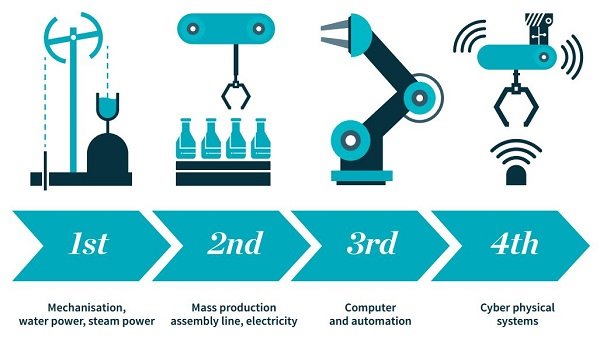
Image source: The University of Sydney
The development of the steam engine drove the first industrial revolution, while electricity and mass production brought about the second. The third, we all know very well was driven by computerisation. And now the fourth is upon us — with disruptive technologies such as the Internet of Things, robotics, and artificial intelligence changing the way we live and work.
Being at the front lines of a new technology that is advancing at an exponentially increasing pace means that Skundberg and her fellow team mates at Nordic Unmanned has to be prescient and always ready to pounce.
“We need to be at the front end of the technology, understand the speed and complexity and constantly figure out which way we need to move to stay in front,” said Skundberg.
But how does she do it?
Be Open-Minded and Customer-Focused

“You always have to be open to new initiatives, new ideas, and be used to changes. When you are working in innovation, new initiatives and change is a big part of that,”
Skundberg believes that embracing change is the only way forward.
“But not change for the sake of change,” she cautioned.
“Instead, look at what your customer needs. Too many have brilliant ideas but did not test the market. They end up failing because they became too in love with their own technology and ideas without first testing or getting feedback from the market,”
She explained how Nordic Unmanned came about not because of a whim, but because they had observed that the technology had advanced to a point where it can be widely adopted. The fact that many countries were already embracing the technology was a solid sign that it would eventually make its way to Northern Europe.
“You need to be open-minded, discovery-driven, you need to be options-orientated. See which options could actually lead to something before you spend too much money.”
Never Stop Learning or Questioning

Skundberg spends most of her free time with her nose in a book or article about her industry and innovation in general. She surrounds herself with mentors and people “who knows more than yourself” to constantly grow as an innovator.
In fact, her first brush with the world of innovation was through co-founder of Engage // Innovate and X2 Inc Christian Rangen, during an innovation bootcamp for one of her previous companies.
“Christian made me understand that we were losing ground and needed to change. That we needed to try to see into the future. We were looking only at the core business when we needed to look beyond that at new initiatives.”
The bootcamp led to the formation of the company Nordic Smart Buildings, led by Skundberg and handed over as she moved onto Nordic Unmanned.
It was the catalyst that helped her see that there were more possibilities than there were obstacles. She realized that she needed to be well-read, and in-the-know in order to stay ahead.
“The fourth revolution is moving very fast. You need to stay on top of what’s happening in order to understand the shifts and be a part of it,”
And despite being the pioneers of bringing the drone technology to the Norwegian people, Skundberg and the team at Nordic Unmanned are constantly questioning themselves on when they will be disrupted.
“There will be a disruption. The point is to be part of that disruption. To see it coming, you have to constantly ask yourself questions like ‘can we do this better?’, ‘will there be a disruption to our business?’.”
Collaborate or Perish

One of the running themes during our talk was Skundberg’s passion about the magic of collaboration. She saw the many possibilities and opportunities that came with working together, and explained how the way to the future is through collaboration.
In the Rogaland region of Norway, competence and money is abundant. The problem is that companies are used to working solo and see each other as competitors instead of being a part of an ecosystem.
“There are so many possibilities for many companies if we exist as part of an ecosystem — and not only for Nordic Unmanned — we’ve got the competence, the enthusiasm, and the money in the region. It is entirely possible for Norway to be the leader of many programs and trends,” Skundberg enthused.
We’ve just begun to scratch the surface of drone technology, and its place in the fourth revolution. Will you be along for the ride?
_________

 On our trip to Silicon Valley earlier this year, we had the luxury of discussing the intricacies of corporate innovation with globally-recognized innovation expert and co-founder and CEO of Mach49 Linda Yates.
Mach49 is one of few companies that has perfected the formula to helping large corporations innovate successfully from within — or as they say, “disrupt from inside out.”
“There’s no reason large companies cannot innovate to create meaningful growth,” Yates remarked in an interview with us recently.
“You have the capital, the resources, the channels, the customers, and great talent. Are you really afraid of startups?”
And yet, even armed with all these resources at their disposal, large businesses are afraid.
Large Companies Fear Disruption

4 out of 5 executives fear being left behind as technology evolves faster than they can adapt.
In a Dell report from 2016, more than half of Asian company leaders believe their businesses will become obsolete in the next 5 years due to competition from startups.
The key finding from the Big Data Executive Survey 2017 showed that nearly half of the executives surveyed are worried about major disruption on the horizon.
Many believe that large businesses don’t have the agility or vision, and are too stuck in their ways to out-innovate startups.
Some give it a go, and dip their toes in what we call “innovation theater” — a massive call for ideas, a pilgrimage to Silicon Valley, an open floor plan. When none of these initiatives result in anything definitive, they throw in the towel and declare that they’ve given innovation a go but it doesn’t work.
Innovation is Not Rocket Science

Having had one foot in Silicon Valley, and one foot in the Global 500 almost her entire career, Linda Yates is one of those who are truly bilingual between the startup world and the corporate behemoths.
“People are now flocking to Silicon Valley, looking for that kind of innovation fairy dust to be sprinkled upon them, and we know that doesn’t work.”
“What we do know from our strategy, and from our work with large companies, is that they can absolutely innovate.”
Yates’ argument is that large companies have all the ingredients that startups don’t — which should give them the upper hand in innovation.
“It’s not fairy dust, it’s also not rocket science. If you think about what Silicon Valley is really good at, it’s fairly straightforward — we understand customer pains.”
Point #1: Understand Your Customer
Surveys are not the way to go.
“Surveys are statistically significant and strategically irrelevant,” chuckled Yates.
“All you’ve done is outsource your potential to understand your customer at a visceral level and develop empathy for your customer, to someone who’s just going to repackage what they learn and sell it to somebody you know.”
When presenting keynotes to global company boardrooms, a question Yates often asked was how many customers they have actually interviewed.
“90% of hands do not go up. 90% of board members have not actually spent time understanding their customers’ pains.”
“Nobody would say they wanted a DVR, a microwave oven, or a Mini. What they would usually express is the pain from not being able to get home to watch their favorite TV shows on time because they were stuck at work, not having the time to make a 4-course meal but still wanting to eat healthy, not having a vehicle that makes it easy to cart an ever increasing number of pets, equipment, kids to myriad places.”
“Our job is to understand customer pain, not ask customers what they want.”
Understanding customer pains is one of the core set of best practices when it comes to innovation.
“We teach companies how to actually interview customers, and understand customer desirability.”
If desirability is huge, then you identify the opportunity and move on to product, service or execution feasibility.
Where companies go wrong:
The mistake many companies make is investing too much time, energy and money into developing a product. At that point, they’re so invested in that product that they’re no longer interested in the customer pain.
“All they’re interested in is showing you the product and asking, ‘what do you like about it?’, when really, people are saying they didn’t want it, don’t need it, but are just too polite to tell you.” said Yates.

Point #2: Marry Customer Pain with the Art of the Possible
Startups are very good at understanding customer pain and marrying that knowledge with the art of the possible (both trends and technology) to come up with a solution. They then place a series of small bets to test their solution.
Understanding the art of the possible is why so many companies decide to visit or set up an office in the Silicon Valley, but innovation happens globally and you do not have to be in Silicon Valley to be successful — you just have to stay on top of the latest trends and technology.
While Yates is not a huge fan of “corporate tourism”, Mach49 does help curate visits for companies that need a Silicon Valley immersion experience to create the sense of urgency that now is the time to disrupt themselves before being disrupted.
Yates says, “We do these very differently, helping companies define a challenge, curating visits relevant to that challenge and wrapping up the week with a “Blitz” — our design thinking workshop on steroids — to ensure they go home with real action items based on what they learned during the week.”
Point #3: Place Small Bets
Many senior executives feel that fueling growth from innovation would be too expensive, risky and difficult. They’re afraid that devoting time and energy to untested waters could derail their core business that’s the cash cow today.
While no one can deny that new ventures are risky business, staying stagnant and not growing in times of constant change is a surefire way to cement a company’s irrelevance and future demise.
There is however, a systematic way to remove the bulk of the risk associated with innovation — a process that most innovation experts call “placing small bets.” This helps remove the greatest amount of risk on the least amount of capital.
“It’s important to place a series of small bets and then unlock additional rounds of funding as you remove the layer of risk — the risk can be market risk, financial risk, it can be a technical risk. All those things have to be thought through.”
Where companies go wrong:
Placing too big a bet.
“Big companies, when they do innovation, they try to boil the ocean. They want to shift the whole oil tanker. But you know, large scale intervention just doesn’t work.” said Yates.
Doing too much at one go, spending too much money without validating the process and risks involved is usually what gives innovation an expensive price tag with no significant returns. Companies that do this end up ticking the “innovation” box, decide it doesn’t work, move on and head towards their own Kodak moment.
Point #4: Make the Shifts You Need for Transformation

Many new ventures face almost certain death when shoved into the existing systems, processes and culture in a corporation. The legacy structure has been fine-tuned over years, even decades, to ensure the success of the established business, with financial and operation models that get in the way of the emerging business.
“There are very significant from-to-shifts that large scale companies have to make to ensure that these new ventures reach escape velocity, that they don’t suffer from the inertia, the antibodies, and the orthodoxies and get killed by the organization,” explained Yates.
Mature corporations have to think about what’s going to get in the way of their innovation initiatives actually becoming successful.
“Is it the metrics we use to measure it? Is it the way we compensate people? Is it the way we resource? Is it our procurement process that takes 6 months to get a new vendor through?” she questions.
Xerox built the world’s first personal computer but failed to capitalize on it, partly because they tried to sell it through their existing sales channel, which in the end resulted in failure because the customers that bought the copy machines simply weren’t the same customers that would purchase the new products.
Ask yourself, “What are the from-to shifts that your departments would have to make to help the new company reach escape velocity?”
Where companies go wrong:
Many corporate leaders complain that their business units have great ideas but just won’t make any investment — but they forget to take into account the limits of their existing structure.
“I ask them ‘how do you pay them? what are their metrics for compensation?’ Like zero for innovation, 100% for making the bottom line and rolling that up.”
Yates remarked that by nature, innovation doesn’t have any net profit attached to it, so it’s unrealistic to ask people to commit themselves to it unless there is an incentive to make that happen.
You need different goals and operational metrics for the teams running the new business ventures.
At Mach49, they help companies create, build, and launch new ventures by applying a very robust set of methodologies during a 12-week incubate process that includes customer desirability, determining product / service execution feasibility, and ensuring business viability.
“We also work with the mothership to help them think about the from-to shifts they will have to make to ensure the new venture can be a success. The goal is ultimately to help the company build the capability to create a pipeline and portfolio of new business opportunities on their own, ideally building their own internal incubator with their own team.” Yates explained.
“During the customer desirability phase, we work with the company’s new venture team to do 100 to 200 customer interviews. We conduct a very robust market assessment to ensure that there is strong customer interest. One client had 10,000 people sign up for a product that didn’t even exist yet, at that point we knew there was a market,” noted Yates.
Point #5: Unleash Your Internal Talent

Sometimes we get caught in the legacy trap. Afraid that something new might alienate our existing customers and threaten our net income levels, and possibly even render our jobs irrelevant. But Yates believes that fear is unwarranted.
“The people running the core business don’t want this innovation to happen because they feel that it threatens their existence and eliminates their reason for being. In fact, the opposite is true.”
She pointed out that there are three types of people in any organization — each serving very different functions, yet complementing one another.
The Internal Entrepreneurs
Internal Entrepreneurs aren’t the people running the core business, but instead are the idea-a-minute person who are close to the customers, have great ideas and just want to be given the opportunity to test them. These people are like startups, or in Silicon Valley terms, early stage founders. Many of these people are not experienced enough, and possibly don’t have the attention span or interest, to run their companies long-term. They stay in the incubator and launch the next thing while handing over the venture they’ve been working on to the next type of people typical in a company.
The Growth Experts
These are the ones who are really good at growing businesses. They’re not really the idea people, but they’re the ones who can take an idea and understand how to grow it 15-20% a year. They know how to recruit people, how to manage people, and how to run the business.
“Some of the best startups in Silicon Valley resulted when brilliant, but perhaps less experienced entrepreneurs knew they needed help growing the business and brought in a more seasoned veteran to both lead and teach them.”
An internal entrepreneur is lucky, they are already surrounded by experienced veterans who can take their venture and grow it.
The Efficiency Experts
The third type of people are the ones who knows how to manage a business like no other. They can operate efficiently, they know how to reduce costs without reducing quality. These are the type of people typically running the core and legacy businesses.
“If they’re smart, they look at the entrepreneurs as the people who are going to basically fuel their pipelines for years to come, because as big as the business is, it’ll fade a la Kodak, a la Motorola, a la the printing business.”
Where companies go wrong:
Believing that they do not have the capacity to innovate. Having worked with corporate innovation since 1994, Yates strongly believes that all companies have the resources, internal talent, ideas, capital, and customers needed to pursue innovation without having to waste millions or billions on a potential failure.
Point #6: Leverage Your Resources

A big argument for several companies is that they do not have the budget or resources for innovation.
Yates begs to differ.
“If you’re paying dividends or cutting costs, that just tells me that you have the money to invest in innovation. And the beauty of it is that it does not have to be expensive.”
It can start small, it doesn’t have to be a massive overhaul, but it helps sow the seeds for the future. The key (as mentioned above in point #2) is to methodically test and remove risks before channeling more money and resources into the project.
If we look at startups, they’re typically funded with a minimal amount of money to kick off — $50,000, $150,000, $500,000 etc. And then they go through a process, proving their hypotheses and market feasibility to unlock more funding to build upon the business.
“As long as you have a rigorous and robust methodology for doing that, then you’re on the right track,”
Where companies go wrong:
Doing “innovation” without any conducive measures or systems in place. Examples include setting up an innovation unit that still has to adhere to organizational constraints, appointing a Head of Innovation who doesn’t have power, and not defining any metrics on corporate venturing.
Point #7: Run both the Core and New Business Concurrently

The whole point about investing in innovation isn’t to push your existing business model aside, but to build on it and expand it for the future.
“You know your product is going to have a lifetime and it’s ultimately going to fade. But it doesn’t matter as long as you are continually reinventing yourself,” said Yates.
In the context of the Norwegian economy, which relies a fair bit on the oil & gas industry — it’s understandable to want to keep optimizing the efficiency of its core business. But while doing so, it also makes sense to leverage the vast amount of data and knowledge they have built up over the years from running the business, and see what they could be doing with that from a business standpoint.
“What could you be doing in terms of alternatives? What could you be doing in terms of digital disruption? What could you be doing about enabling small, medium-sized businesses around energy or consumers around energy?” asked Yates.
She aptly analogized the oil industry as an oil tanker.
“You send out a series of speedboats and tugboats that are tethered to the oil tanker. Ultimately, you’d have sent out enough of those that you can shift, if not, you can continue to run your core business, but they have to simultaneously be thinking about what’s next.”
Where companies go wrong:
Being overly protective of the core business and not keeping up with the pace of change, instead of adopting a methodology that works to help you develop a portfolio of new ventures.
__________________________

Linda Yates is the co-founder / CEO of Mach49. Working under the motto “Disrupting Inside Out”, Mach49 helps large organizations create, build, and launch new ventures generated from within. Based in the middle of the Silicon Valley, Mach49 works with a host of global companies, including a handful from the Nordics.
Engage // Innovate collaborates with Mach49, and will bring its first Norwegian client to Mach49 later this year.

Do you want to learn more?
Contact Christian Rangen, partner at Engage // Innovate today at christian@engage-innovate.com

Seeing a growing a global interest, Engage // Innovate is strengthening its presence into the Middle East. Under the leadership of Tarek Fahmy, the global strategy & innovation consulting company will serve an increasing number of clients in the Middle East and North Africa.
“In the past 24 months, we’ve significantly increased our business in Asia and the region. Opening up a business in the region is just the next natural step for us,” says co-founder, Christian Rangen.
“We are privileged to have capacity like Mr. Fahmy joining us to build our client base in what is truly one of the most exciting and dynamic regions of the world,” says Mr. Rangen.
Building Transformational Capacity

Our entire team is truly excited by the strategic opportunities found in the global energy industry. While the transition away from fossil fuel, most of it oil, can be painful in the short term, we believe both companies and governments will benefit from it. Our work from the past three years on building transformational capacity has shown that companies can succeed on a large scale strategic change.
We’ve run projects on solar energy, smart city, electric cars, fish farming, space mining, drones, and the future of mobility — all as part of building transformational capacity.
See our client success stories here.
Serving Multiple Industries
Engage // Innovate serves clients in technology, energy, oil & gas, fast moving consumer goods, consulting & advisory, education, construction, and transportation. The company’s strategy tools and methodologies help executives navigate industry shifts, manage strategic inflection points, and develop a deep capacity for successful innovation.
The company’s services focus on three areas — innovation workshops & training programs, strategy and transformation projects, and a growing number of corporate accelerator programs to accelerate new business development and new ventures.
“We feel our portfolio of services is a good match for the challenges and opportunities to be found in the Middle East,” says co-founder Mr. Rangen.
Experienced Strategy Designer
Mr. Fahmy joined Engage // Innovate with a nearly 20-year background in management and advisory services, most recently coming from a position of a strategy designer with a global consulting company, where he helped develop programs, projects and served clients in the Middle East.
Growing the Business on the Ground
Engage // Innovate is already serving clients in the region and will significantly ramp up business development activities. Later this year, the company will host a number of workshops, keynote talks, and executive sessions for clients and potential clients in the region.
To engage our services or explore a partnership with Engage // Innovate in the Middle East and North African regions, please email Mr. Fahmy at tarek@engage-innovate.com.

Leading strategic transformation is one of the most challenging tasks executives face. Over the past six years, we’ve developed strategy tools to help clients navigate a dynamic strategy landscape. Today we’re pleased to announce our latest tool — The Transformation Test. Check it out and see how your company’s doing.
Over the past three years, our team has spent an increasing amount of time on strategy and transformation. The world of strategy is no longer a linear, easy, more-of-the-same, but is changing into something far more dynamic and complex. Faster change, increasing disruption, unlikely competitors emerging with very, very different business models.
Very often, industries are no longer shaped by traditional industry boundaries, but what Professor Rita McGrath calls “arenas”. Industries are no longer stable. They frequently go through strategic inflection points.
All of this requires executives in companies to put new strategy tools to the task of building future-fit strategies.
At StrategyTools.io, our long-term research program, we have developed a growing number of strategy and innovation tools in use with leading companies around the world. Many of our challenges working with clients in solving their strategic ambitions and challenges comes back to how we deal with large scale change and transformation.

An excerpt from The Transformation Test. Download the full strategy tool for free at StrategyTools.io
To help answer this question, our team has developed a simple-to-use, easy-to-grasp strategy tool called The Transformation Test. While the applications might be profound and complex, our observation is that the tool itself gives you a quick snapshot of your company’s strengths and potentially also weakness in how to successfully lead strategic transformation.
How to Use The Transformation Test
The Transformation Test helps teams and management have strategic conversations and measure progress on the topics of innovation, business models and transformation.
It asks you questions under the different tenets of transformation — your company’s Innovation Structure, Innovation Portfolio, Innovation Pipeline, your Successes with Business Model Innovation, and finally, your Transformational Capacity.
Based on how well you answer the questions set within The Transformation Test, you give yourself a score from 1-5.
This helps give a more well-rounded angle on how well you’re doing in terms of transformation.